A Rewatch Without the Nostalgia Filter
A rewatch without the nostalgia filter helps you notice what a familiar film means to you now, using a simple weeklong routine for attentive viewing.
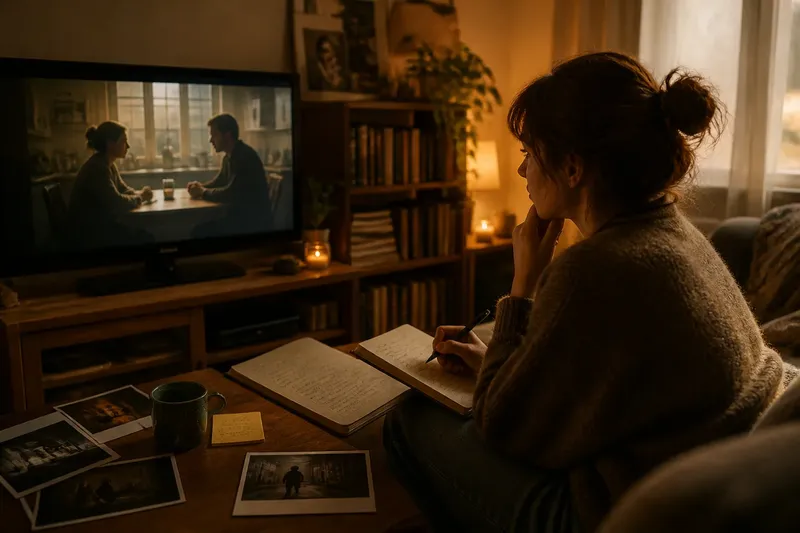
A rewatch without the nostalgia filter begins before you press play: write down what you remember, then let the film challenge that memory. A familiar movie can feel fixed because its scenes are tangled with where you first saw it, who watched beside you, or what you understood then. A weeklong routine gives those old associations room without letting them dictate what the film is allowed to mean now.
The aim is not to remove nostalgia. That would be impossible, and not especially useful. Instead, separate the film you can observe from the story you carry about it. Make space for both, and you may notice a detail, performance, rhythm, or discomfort that your earlier impression missed.
What does a rewatch without the nostalgia filter change?
An old impression often works like a shortcut. You remember a character as brave, a romance as inevitable, or an ending as comforting, and your attention follows that conclusion. On a rewatch, those labels can hide how the film creates its effect: a pause before a reply, a camera held outside a room, music that arrives before a character has made a choice.
Noticing those choices does not mean your earlier response was wrong. It means the response belongs to a particular moment in your life. You may now have different experiences to bring to the same scene, or simply have a sharper sense of how films use editing, sound, and performance. A changed response is information about the encounter, not a verdict on the person you used to be.
Keep three things distinct in your notes: what you remember, what appears on screen, and what you make of it. “I remember the farewell as tender” is memory. “The two characters speak across the kitchen table” is observation. “The distance makes the farewell feel less settled to me now” is interpretation. This small separation makes it easier to stay curious when the film surprises you.
How can you make the weeklong routine useful?
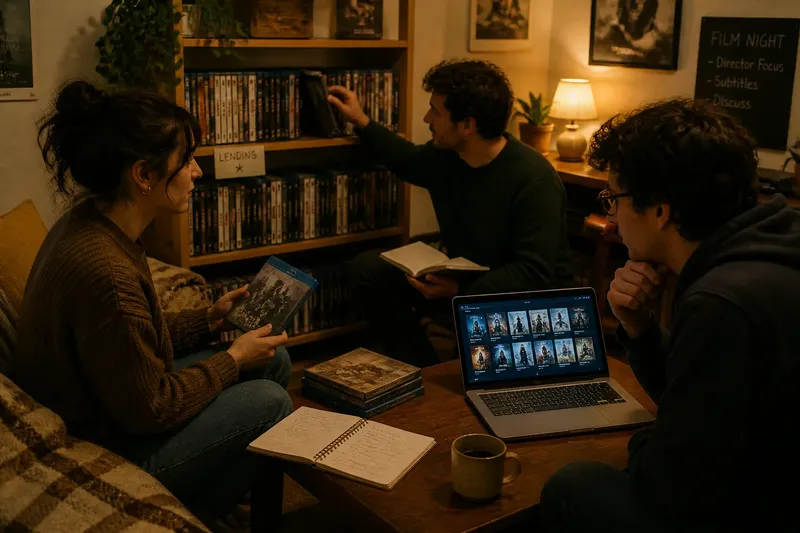
Choose one film you have not watched recently but can recall clearly. Pick a version you can watch comfortably, with subtitles or captions available if you use them. Avoid searching for reviews or explanatory videos before the rewatch; other people’s interpretations can be interesting later, but they can also steer your attention before you have had a fresh encounter.
Before the screening: record the old impression
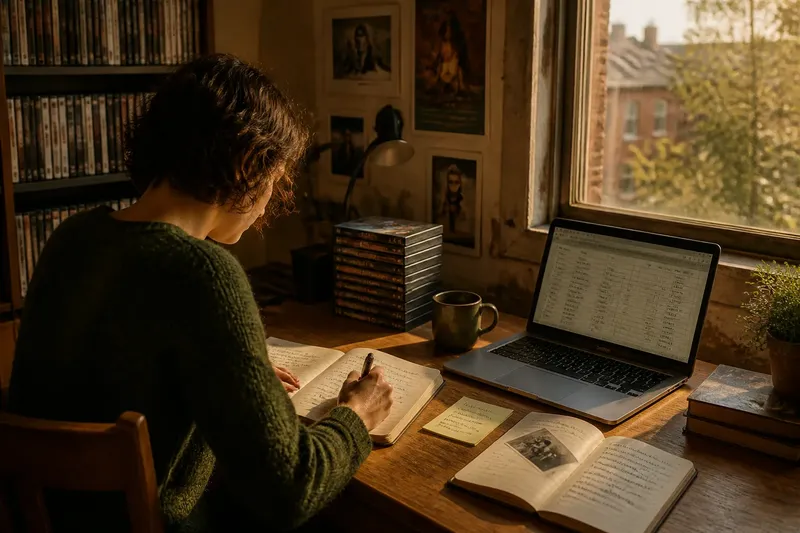
On the first day, set aside a few minutes to jot down what you expect. Name a scene you think you remember, a character you feel sure about, and the emotion you associate with the ending. Add one question you have about the film now, even if it is plain: “Will I still find the ending reassuring?” Do not research whether your recollection is accurate. The gap between memory and the film is part of what you are trying to notice.
Say you remember a comedy as a string of quick jokes, with a lovable lead who always gets out of trouble. Write that down without defending or criticizing it. During the screening, you might notice that a recurring joke depends on another character’s embarrassment, while the lead’s escape leaves a small cost behind. The result is not a correction you have to accept; it is a new observation you can weigh against the affection attached to your memory.
During the screening: follow one fresh question
On another day, watch the film in one sitting if that suits you, or divide it at a natural break if you need to. Before starting, choose a question that directs attention without demanding a particular answer. You could follow who gets to speak in a family scene, how a location changes the mood, or whether the soundtrack tells you what to feel before the actors do.
Let the film play rather than pausing every time you notice something. A rewatch is still an experience, not a hunt for evidence. If a detail catches you, make a brief note after the scene or keep it in mind until the credits. For captions, check that they are on and readable before starting; repeatedly adjusting playback can interrupt the pace you are trying to experience.
Once the film ends, write down three observations before deciding what they mean. Be concrete: a character waits before entering; a familiar room looks different after a cut; a line lands differently than expected. Then add a sentence about your response. This keeps the record grounded in what happened on screen while leaving room for a personal interpretation.
After the screening: compare memory with attention
On the next day, reread your first notes alongside your observations. Mark where memory and the film agree, where they diverge, and where the difference changes your response. A remembered scene may still feel as powerful, but for a reason you had not named. Or a moment that once seemed incidental may now carry the film’s tension.
Do not make a scorecard of what you missed. Memory preserves some things and lets others fade; that is not a viewing failure. Ask instead what the old impression was doing for you. Perhaps “comforting” described the people you watched with as much as the story. Perhaps “confusing” was your younger self’s honest response to a film that now feels more legible, but no less strange.
Later in the week: revisit one scene, then stop
Pick a short scene that connects to your question. Watch it once without stopping. If you want, watch it a second time with attention on a different feature: sound instead of dialogue, or the edge of the frame instead of the central action. You do not need to inspect every cut. The point is to return to one moment with a more precise question than “Was it as good as I remember?”
Close the routine with a short note that holds both versions of the film: what you still cherish, what you see differently, and what remains unresolved. You might keep it beside a ticket stub, a personal film journal, or a note in a phone app. The record can help if you revisit the movie years later, but it should not become a rule for how you are supposed to feel next time.
Which questions help you see the film anew?
What if the film feels worse than I remember?
Try naming the specific source of the change: pacing, humor, a performance, or an idea that no longer sits comfortably with you. You can value the memories attached to a film while deciding that the film itself now works differently for you.
What if I still love it just as much?
Look for what sustains that affection rather than treating it as proof that nothing has changed. You may notice a performance, visual pattern, or small exchange that was already there but now reaches you for a different reason.
Should I read reviews before watching again?
For a fresh first impression, save reviews until after your own notes. Later, compare a critic’s language with the moments you noticed, and treat disagreement as another perspective rather than a correction.
What if I cannot remember much about the film?
Choose a movie with at least one clear association, such as a character or a mood, rather than forcing a detailed recollection. If little returns, that absence is useful context; watch for what actually holds your attention now.
How do you keep the notes from becoming a verdict?
Use language that records a response rather than announcing a final judgment. “The reunion felt less convincing to me this time” leaves room for a reason and another viewing. “The film is overrated” closes the question before you have described what produced that reaction.
It also helps to distinguish personal change from changes in the film’s surroundings. You might be watching on a smaller screen, with a different language track, or in a room that makes a quiet scene harder to hear. Those conditions affect the encounter. Note them when relevant, but do not let them explain away every changed response.
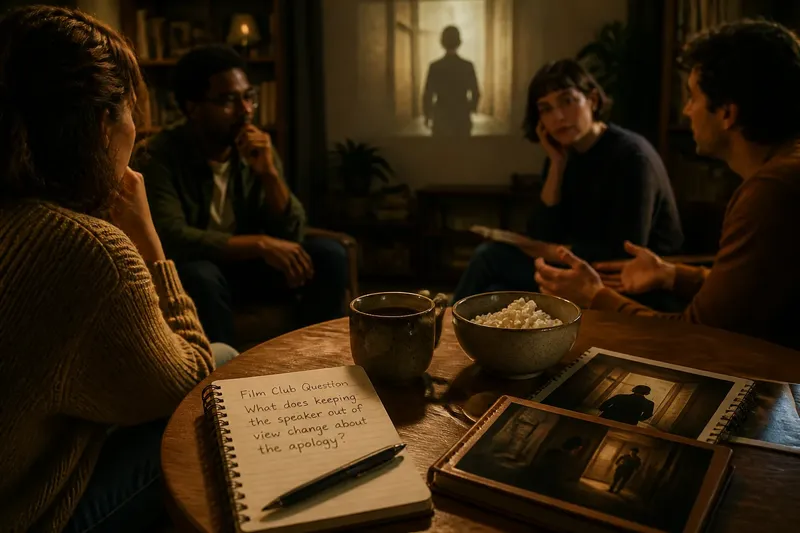
If you discuss the rewatch with someone else, offer a scene before offering a verdict. “I noticed how long the camera stays on the doorway after she leaves” gives another viewer something specific to consider. They may remember the moment differently or point to a detail you overlooked. The exchange can widen your attention without requiring either person to settle what the film means.
A rewatch without the nostalgia filter does not ask you to choose between the film you remember and the one on screen. Keep the first impression as part of the record, then make room for the details that reach you now. When a familiar scene changes meaning, the shift can reveal as much about your present attention as it does about the movie.